The recent Summer Forecasts 2025 published by the Construction Products Association predict that UK construction output will grow by 3.7% in 2026, up from 1.9% in 2025. CPA Summer Forecast.
Along with that overall rise, several key sectors are expected to see particularly strong growth in 2026:
• Private housing (new build): +7.0%
• Private housing repair, maintenance & improvement (RM&I): +3.0%
• Infrastructure: +4.4%
The forecasts remain understandably ‘cautiously optimistic’ whilst the UK economy continues to experience risk (affordability, regulatory delays, inflation and possible tax or public spending changes) which may of course realistically impact actual delivery.
What This Might Mean
For companies across the construction supply chain (housebuilders, contractors, suppliers of materials and components, infrastructure businesses) this forecast points to a potential window of opportunity. But clearly opportunities don’t manage themselves.
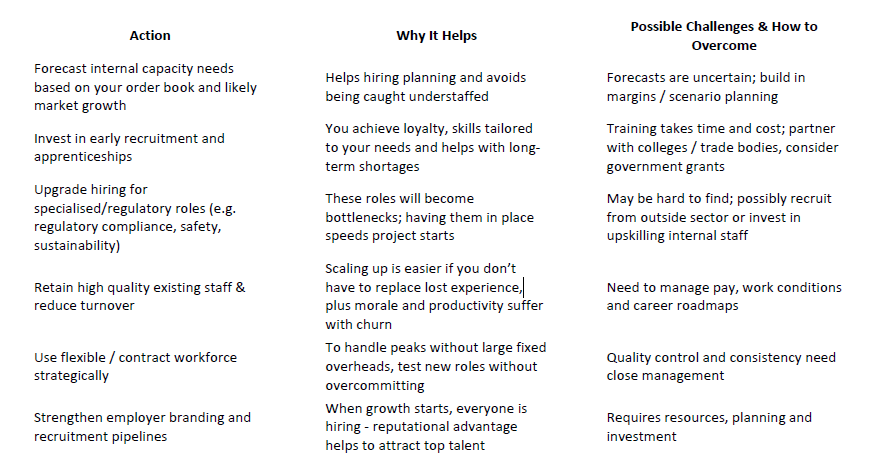
To take full advantage, companies need the right people on board, at scale, ahead of demand peaking.
Potential implications:
• Lag Time for Staffing / Skills
Recruiting, training, and onboarding skilled leaders and key team members takes time. If you wait until demand is visibly
surging, you’ll be behind. Early recruitment means businesses can build capacity, improve performance, reduce the
reliance on expensive consultants/interims, and avoid being understaffed.
• Securing Competitive Advantage
Companies that strengthen their teams ahead of the growth trajectory (especially in project delivery, planning, regulatory compliance, site safety, and innovation) will likely win more projects once the market accelerates. Capacity, reputation, and speed will matter. Companies short of people will lose out or suffer from delays and inherent cost impacts.
• Managing Risk of Delay / Regulatory Bottlenecks
The CPA notes that project start delays (for example for high-rise projects) and planning approval processes remain a big constraint. Having senior staff who understand regulatory environments, experience with navigating approvals, and
strong relationships in local government can potentially help mitigate those risks. Recruiting for those skills now gives more buffer.
• Meeting Demand for New Skills
Growth is not just in sheer volume but also in type: energy efficiency (heat pumps, solar PV), fire safety remediation, infrastructure works, possibly retrofit. These often require different or enhanced technical skills. Businesses need people who are trained or able to be upskilled.
• Flexibility & Resilience
If forecasts are correct, pressures on supply chains, logistics, and resources (materials, machines, labour) will grow.
Staffing flexibility (including cross-trained roles and the ability to scale up / down) will help to absorb any negative impact, reduce costs, and enable the opportunity for better/quicker responses to changing project demands or economic conditions.